
The riskiest line in your book can take the whole season.
Heritage Live cancelled its entire 2026 season across three estates at once. The high-guarantee, older-skewing, outdoor date is the most exposed line you hold — and those lines fail on the same soft summer.
Heritage Live cancelled three estates in one announcement. The riskiest line in your book is the one that can take the whole season.
August 11, 2026 · 5 min read
When a promoter’s summer comes apart, it usually comes apart one date at a time — a soft On-Sale Window here, a weather call there, each absorbed on its own. Heritage Live’s came apart all at once.
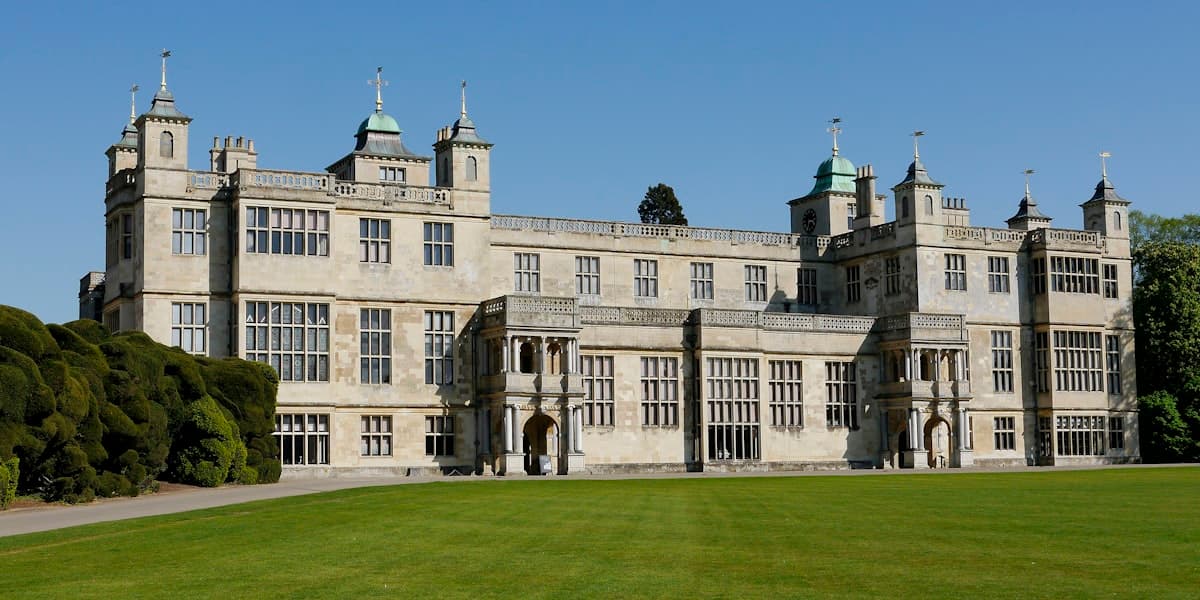
On July 15 the UK concert series cancelled its entire 2026 season across all three estates — Englefield in Berkshire, Audley End in Essex, and Sandringham in Norfolk — in a single announcement (Pollstar). The whole book, at once.
The lesson for an independent US promoter carrying 50–150 shows is not about British stately homes. It is that the high-guarantee, older-skewing, outdoor date is the single most exposed line in your book — and when you hold several of them, they tend to fail on the same summer.
The whole season went down in one announcement, not one date at a time
Heritage Live is the flagship outdoor brand of GCE Live (Giles Cooper Entertainment), a British independent promoter that has run these shows for roughly a decade (Pollstar). The 2026 season was not thin. Sandringham alone was to host Eric Clapton — billed as his only UK performance of the year, with Ronnie Wood — plus Lionel Richie, Janet Jackson, Christina Aguilera and Ricky Martin (CelebrityAccess).
Then all of it was cancelled at once. GCE Live cited lower-than-average ticket sales against spiralling costs and, decisively, an investment package it had been “working desperately hard behind the scenes to conclude” that fell through “at the 11th hour” (CelebrityAccess). It would “be irresponsible and wrong of us to proceed without the certainty that we’d be able to meet all of our supplier, artist and crew costs,” the company said (Pollstar).
Read the sequence. Soft demand and rising costs put the season under water; the financing was the last thing holding it up; when the financing went, the whole book went with it.
Count is not diversification when the lines share the same drivers
The instinct after a collapse like this is that a bigger book would have absorbed it — more shows, more spread, less exposure to any one date. That holds only if the shows fail independently. Heritage Live’s did not.
The marquee outdoor dates in a summer book tend to share the same three inputs: a large guarantee, an audience that skews older, and an open-air build. When the summer softens, it softens across all of them at once — the same macro, the same cohort, the same weather window. A promoter who books six heritage-premium outdoor dates believes they hold six bets. They hold one bet made six times.
There is a second correlation layer beneath the first, and it is the one that actually ended Heritage Live. The season ran on a single balance sheet. One rescue package sat behind the entire slate, so its failure took everything at once (CelebrityAccess). Most US promoters will never run a festival series, but many carry a summer on one line of credit, one insurance program, one cash position. Shows that look independent on the calendar can be a single point of failure on the books.
Three risks stack on one line: the heritage-premium outdoor date
Zoom from the book to the single most exposed line in it. The heritage-act outdoor date carries three distinct risks, and — unusually — it carries all three at once.
First, the guarantee. A legacy headliner commands a premium, and that guarantee is a fixed cost that does not flex when sales come in soft — the exposure we mapped in the guarantee-versus-door-deal read. We don’t publish figures; heritage-act guarantees are large and unpublished, so carry the premium as a fixed exposure and size it as a range.
Second, the audience. Older-skewing acts are precisely the cohort where aggregate demand softness is closest to the truth and cost-sensitivity is the higher risk — the case for pricing the cohort, not the macro. Heritage Live’s legacy tier failing to clear is that cohort, live from the field.
Third, the build. An open-air date is weather-exposed and capex-heavy, with cancellation insurance now a material, rising line rather than a footnote — the reason to underwrite the heat the way you underwrite a Radius Clause. Same date, three risks, stacked.
This is a different failure from the mid-tier squeeze. That thesis — the tier the market is deleting — is about capacity and pricing power; these were premium acts at stately homes, well outside that mid-cap bracket. The exposure here is not the tier. It is the concentration.
The softness is not a UK-only story
The temptation is to file this under British festival trouble. Don’t. In the US, Portland’s Vanport Jazz Festival cancelled its 2026 edition after ticket sales came in down a reported ~60% against the prior two years, which its founder attributed to tighter household budgets (KPTV). Single-source and self-reported, so treat it as a directional signal and hold the number loosely. But it points the same way: the older-skewing, discretionary outdoor date is where the softness is landing first, on both sides of the Atlantic.
What the Brief can read — and the one thing it can’t
A Promoter Brief reads one line at a time. Point it at an artist and it flags what that line carries: the guarantee exposure, the soft-demand signal, the tour fatigue. What it will not tell you is that those flags rhyme across your marquee outdoor dates — that the same three risks are stacked on each of them, and that one soft summer pulls on all of them together. That read is yours to carry, across the whole book.
So carry it. Before the season locks, list every date that is high-guarantee and older-skewing and outdoor, and add up how much of your total guarantee exposure sits on that one intersection. Then stress that whole cluster against a single soft summer, modeling every correlated date as one event — a per-date check against each On-Sale Window will miss it. And where the financing, insurance, or cash behind those dates is shared, make it independent. Heritage Live’s book went down together because it was underwritten together. Yours does not have to be.
Run your first booking brief
Ask any question about an artist, market, or venue. Callboard.fm delivers a full booking brief — risk flags included — in minutes.
Start Free Trial →