
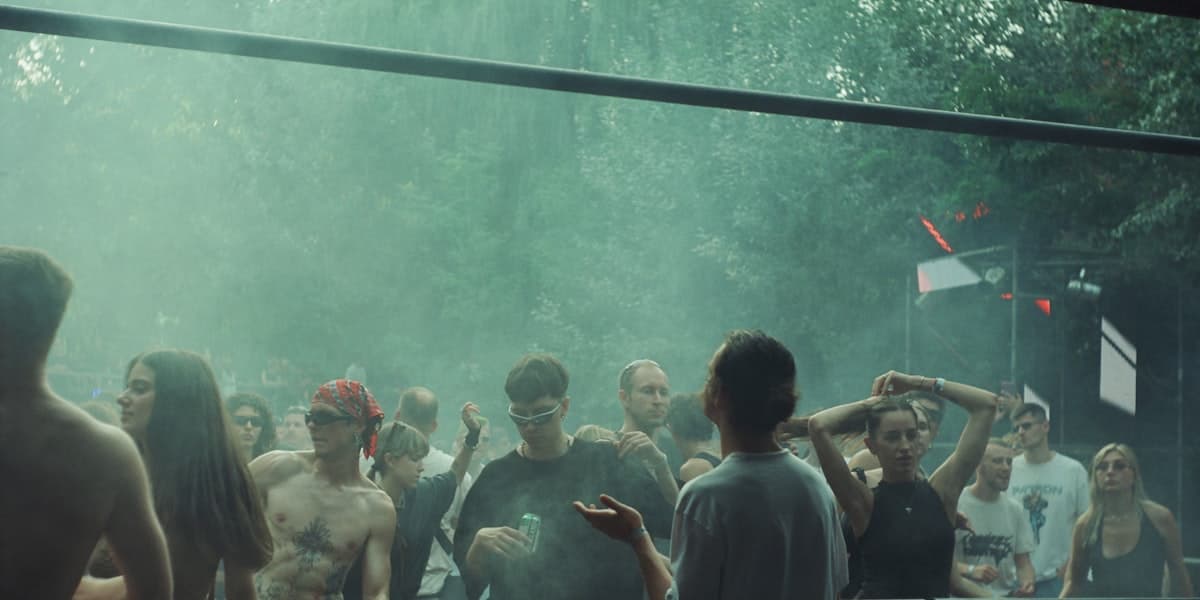
Underwrite heat like a Radius Clause.
Cancellation insurance has roughly tripled and a US festival refunds tickets at 90°F. On an outdoor summer date, heat is a priced line you design around — not a footnote you absorb.
Cancellation insurance has tripled and a festival refunds tickets at 90°. Underwrite heat like a Radius Clause.
July 14, 2026 · 5 min read
Heat has crossed from a force-majeure footnote into a cost you can price. On an outdoor summer date in a hot metro, it is now a line you should carry the way you carry a Radius Clause — a known constraint you design around before you sign, not a surprise you absorb after.
The 2026 heat wave was the disruption. The repricing is the story.
A single stretch of summer heat forced cancellations on two continents. Entry to the “A Capitol Fourth” concert in Washington was delayed on July 3 to limit sun exposure as temperatures topped 100°F, its rehearsal closed to the public, and the nearby “Evening on the Ellipse” show was cancelled outright (Washington Post). Days earlier, across the Atlantic, Defqon.1 was fully cancelled in the Netherlands under a Code Red heat warning from the national weather service (Pollstar).
Cancelled shows are not new. What is new is that heat has stopped being only a weather problem and become a priced one — in the insurance a promoter buys, and now in the ticket a fan holds.
Insurance already repriced the outdoor date
The cost of covering an outdoor date is no longer a footnote — event-cancellation insurance premiums have roughly tripled. For much of the decade before 2024, event-cancellation insurance ran about 80 cents per $100 of expenses and forecast profits, so a $500,000 booking could be protected by a policy near $4,000; that rate had since climbed sharply and deductibles were ballooning (Billboard Pro, March 2024).
The reason is that insurers stopped treating weather as random. They now price on regional historic patterns — location and time of year — so a July date in a hot market is underwritten on that market’s own heat record (Billboard Pro).
That rising cost does not land evenly. As majors trim payouts and artists carry their own policies, the indie promoter feels the premium earliest (Billboard Pro).
At the far end, the cover simply stops pencilling. The Harvest Moon Festival in Miramar, Florida was cancelled in September 2022 because the insurance quotes came back unaffordable — the event was 70% sold when it was called off (Billboard Pro). Any figure you carry here is an estimate against your own date, but the direction is not in question: on a hot outdoor date, the premium is a material line in the budget.
A festival wrote heat into the ticket contract
Heat has moved out of force-majeure boilerplate and into the priced terms of the sale. Iowa’s Hinterland festival runs a “90-Degree Guarantee”: it checks the National Weather Service forecast a few days out, and if the forecast for a festival day shows 90°F or higher at the site, ticket holders can request a refund of that day’s admission (Hinterland; Iowa Public Radio).
Read it as a booking instrument, not a marketing line. The promoter has taken a risk that used to sit unpriced in the fine print and written it into the offer at a fixed, forecast-triggered cost — a refund on a defined threshold, capped to admission.
That is the same discipline a Radius Clause applies to routing: name the constraint, define the trigger, and price it into the deal instead of arguing about it later. Heat is late to that list, but it now behaves like the rest of it — a real constraint a promoter can forecast and price.
A market that already priced it in
Where climate risk got priced in first, it reshaped both the calendar and the demand read. In Australia, more than 50 festivals have been fully or partially cancelled by extreme weather over the past decade (Resident Advisor).
The buyer side moved with it. In a Green Music Australia study of 1,155 fans, 34% said they were now wary of buying a ticket without a reliable weather forecast, and 33% would skip a festival if the temperature topped 40°C (Resident Advisor).
That is the part a promoter should read closely. Priced-in heat does not only raise the cost of the date; it slows the On-Sale Window, because a share of the audience now waits for the forecast before it commits. A hot-market outdoor date can carry both a higher premium and a softer early sale — two effects from the same cause.
Carry heat like a Radius Clause
The Promoter Brief already flags the risks that decide an outdoor date — tour fatigue, competing events, a Radius Clause conflict. Heat is the newest member of that family, and it is one the brief does not compute for you; it is single-artist, and it does not read the weather. So a promoter has to carry it onto the memo the same way they carry the others — as an explicit line of its own.
Four moves put a number on it before the offer is signed.
Shift the date out of the peak-heat window when the routing allows it. Hold an indoor alternative in the same market as a fallback, so the show has somewhere to go.
Write a heat-refund trigger into the terms, the way Hinterland did, so the exposure is defined rather than open-ended. Or carry an explicit contingency line in the budget, sized to the higher premium and the postponement risk.
An outdoor summer date now carries a rising, designable weather cost — and the promoter who prices it in beats the one who books past it. This pairs with a supply problem already on the table. The wave of new sheds is exactly the outdoor capacity most exposed to heat, so the flooded tier and the priced-in weather risk are the same date seen from two sides.
None of this is a new kind of work. It is the discipline of underwriting the date, not the tour — reading what the specific show carries — extended to a risk that used to be free and no longer is. It belongs in the same taxonomy of booking risk as everything else you check before you sign. The international booking has the same shape one step upstream, where you underwrite the visa bill — the USCIS petition fees, fixed and non-recoupable, spent before the on-sale.
Before you sign the next outdoor date
Take any outdoor or shed date in a hot metro and give heat a line of its own. Get the current cancellation-insurance quote — not last year’s — and decide the fallback before the offer, not after the heat warning. The premium and the softer early sale are both real costs now, so carry them on the date and you still pencil when the forecast turns.
Heat is one of three risks stacked on the same line. When the high-guarantee, older-skewing, outdoor date repeats across a summer book, those correlated lines can fail on one soft summer — the case for underwriting the whole book, not one date.
Tools & templates
Run your first booking brief
Ask any question about an artist, market, or venue. Callboard.fm delivers a full booking brief — risk flags included — in minutes.
Start Free Trial →