
How Much Do Venues Make From Concerts?
The venue-side show-night ledger, itemized — the bar, the facility fee, the merch cut, and the room itself.
How much do venues make from concerts? The show-night P&L, line by line
August 20, 2026 · 7 min read
Ask how much a venue makes from a concert and most people picture a slice of the ticket. That is the wrong line to watch.
On a typical club or theater night, the ticket barely moves the building’s number. The venue makes its money on the bar, a per-ticket building fee, its cut of merch, and the room itself — the lines a ticket buyer never sees and a promoter negotiates against without always naming them. Here is the venue-side ledger, itemized. It is the flip side of the promoter’s ledger, which walks the same night from the other chair.
The ticket is the decoy line
In a promoted show, the box office is the promoter’s problem, not the venue’s. The promoter carries the guarantee, the marketing, and the door risk; the building either rents the room for a flat fee or takes an agreed split of the door. Live Nation says the shape of this out loud in its 2024 10-K: “Promoters earn revenue primarily from the sale of tickets. Artists are paid by the promoter.” The venue sits one layer out from that sentence. Whether the promoter’s night clears or craters, the building’s ticket-side number is fixed the moment the deal is signed.
So the honest answer to “how much do venues make from the ticket” is usually a flat rent or a pre-agreed door percentage — a floor, not a margin. The margin is everywhere else.
Rent versus the door split decides which business the venue is in
There are two rooms inside every room. As a landlord, the venue does a four-wall deal: a flat rental, no door risk, and it keeps the bar. As an operator, the venue promotes the show itself — it takes on the artist guarantee and the marketing, and in exchange keeps the upside and the bar. Same building, two entirely different P&Ls.
Which one you are negotiating against changes what you can ask for. A four-wall landlord has already been paid and is indifferent to your Sell-Through; an operator-venue is your co-risk-taker and prices accordingly. The deal structures themselves — guarantee, versus, door — are laid out in guarantee versus door deals; the point here is only that the venue’s answer to “what do you make” depends entirely on which of those two chairs it is sitting in.
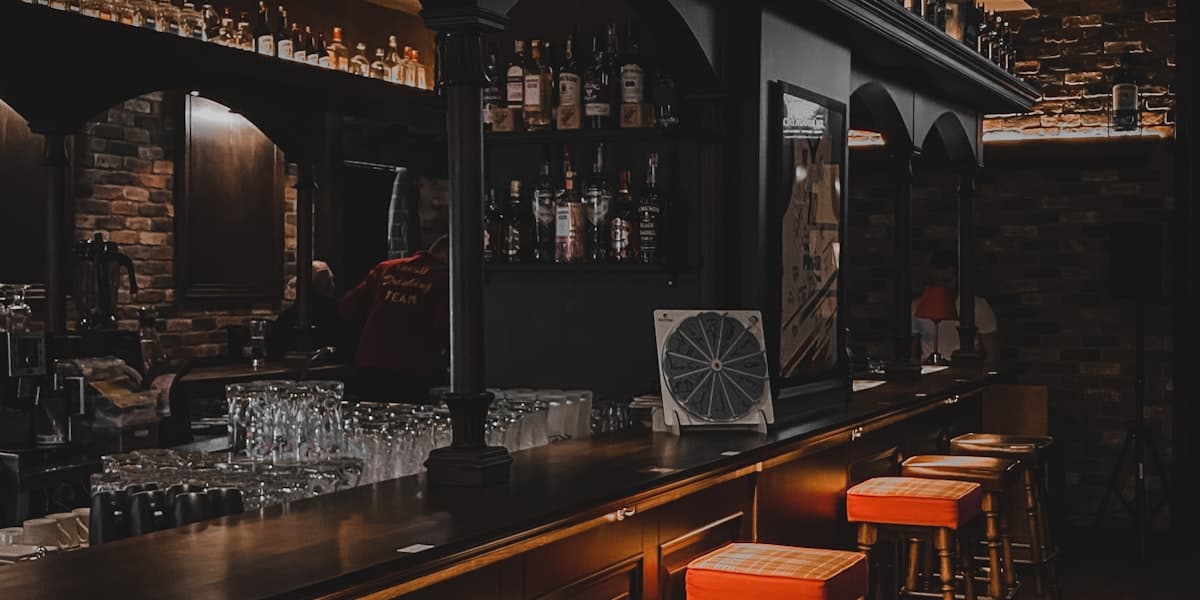
The bar is the margin engine, and it is not close
This is the real answer to the search query. Beverage is the highest-margin line in the building. The bar industry runs on a pour cost — liquor cost as a share of drink price — of roughly 18 to 24 percent, with most operators targeting around 20 percent, which works out to about 80 percent gross margin on drinks (Toast, Bar Profit Margin; BinWise, Alcohol Pricing). A $12 well drink costs the venue somewhere near $2.40 in liquor.
Run that against a real crowd. Pollstar’s December 2025 year-end venue data put average attendance at rooms of 750 capacity or under at 278 tickets per show in Q3 2025. If those 278 bodies spend even $15 a head across the night, that is roughly $4,170 in bar revenue at an ~80 percent gross margin — call it $3,300 of gross profit, before staffing, from drinks alone. On most club nights that number dwarfs whatever the building took off the door.
Treat the specific figures as illustrative ranges, not a quote for any one room — pour cost, per-head spend, and bar staffing all swing hard by market and by night. But the direction does not swing: the bar, not the ticket, is where the concert business actually earns. A promoter renting a room dry — no bar rights — is negotiating against a venue whose best line they never touch.
The facility fee is the quietest reliable line
Look at a ticket receipt and you will see a stack of fees. Most of them are the ticketing company’s. One of them usually is not: the facility fee is a flat per-ticket charge, commonly in the $5 to $15 range, that is set by and kept 100 percent by the venue (The Ticket Blog, Types of Concert Venue Ticket Fees, 2026). It reads as “ticketing fees” to the buyer and lands as building revenue.
At the 278-ticket average above, a $10 facility fee is about $2,780 the venue keeps before the doors even open — money that does not depend on the bar, the guarantee, or the split. Venues also take rebates from ticketing companies in exchange for exclusivity; the structure is real, but the numbers are private and deal-specific, and the public figures are old — Ticketmaster was reported to pay around £1 million a year to be the O2’s preferred agency (Digital Music News, 2013). Treat the rebate as a line that exists, not a number you can pencil.
The merch cut is margin the venue is being forced to give back
For years, venues took a cut of the merch table — the artist’s own T-shirts and records, designed, printed, and hauled in by the artist. The take has run 15 to 35 percent of merch sales, according to United Musicians and Allied Workers, whose #MyMerch campaign has pushed venues to drop it entirely; more than 400 venues have now pledged to take zero (UMAW, #MyMerch; Music Ally, November 2022). Live Nation began waiving some of its venues’ merch cuts in October 2023 (Jacksonville Music Experience, 2023).
That fight is the most useful thing on this whole ledger, because it is the clearest public admission that the merch cut was margin, not cost recovery — a line a large operator could simply stop charging. The same logic covers the rest of the ancillary column: parking, coat check, premium seating, box and VIP upsells. None of it is large on any single night, and all of it counts as ancillary revenue the building keeps regardless of who promoted the show. Frame each as an estimate; the point is the column, not the cents.
What the venue eats is why “keeps the bar” still is not “makes money”
Everything above is gross margin. It sits against a cost stack that has gotten heavier. NIVA’s State of Live 2025, prepared by TEConomy Partners, found that 64 percent of US independent stages operated unprofitably in 2024. Artist and booking fees were the single largest expense category at 31 percent of independent-stage costs, ahead of the 26 percent that went to staffing.
So the building keeps the bar and the facility fee, and still loses money two nights out of three, because staffing, rent, insurance, security, and — when it self-promotes — the guarantee eat the gross margin whole. The 278-ticket average night is not carrying a heavy fixed-cost room by itself. That gap between the lines the venue keeps and the lines it eats is the entire reason a venue’s settlement can look healthy on the door and still bleed by the end of the month.
Negotiate against the bar, not the headline
Here is what the ledger changes at the table. If the building earns on drinks, facility fees, and ancillary, then the ticket line is exactly where a promoter has room to move. A reliable draw that fills the bar is worth a cleaner rent or a better door split to the venue, because you are feeding its actual margin engine — the 80-percent-gross line — not the fixed rent it already banked.
So before you counter an offer, know which lines this room keeps and which it eats. A four-wall landlord that keeps every drink will trade rent for a guaranteed sellout; an operator-venue underwriting the guarantee will not. None of this shows up in a single artist’s numbers — a booking brief tells you the draw, not the building’s P&L — so it is context you bring to the room, read off the deal type in front of you. The venue already knows which line it makes its money on. The promoters who negotiate best are the ones who walk in knowing too.
Run your first booking brief
Ask any question about an artist, market, or venue. Callboard.fm delivers a full booking brief in minutes.
Start Free Trial →