
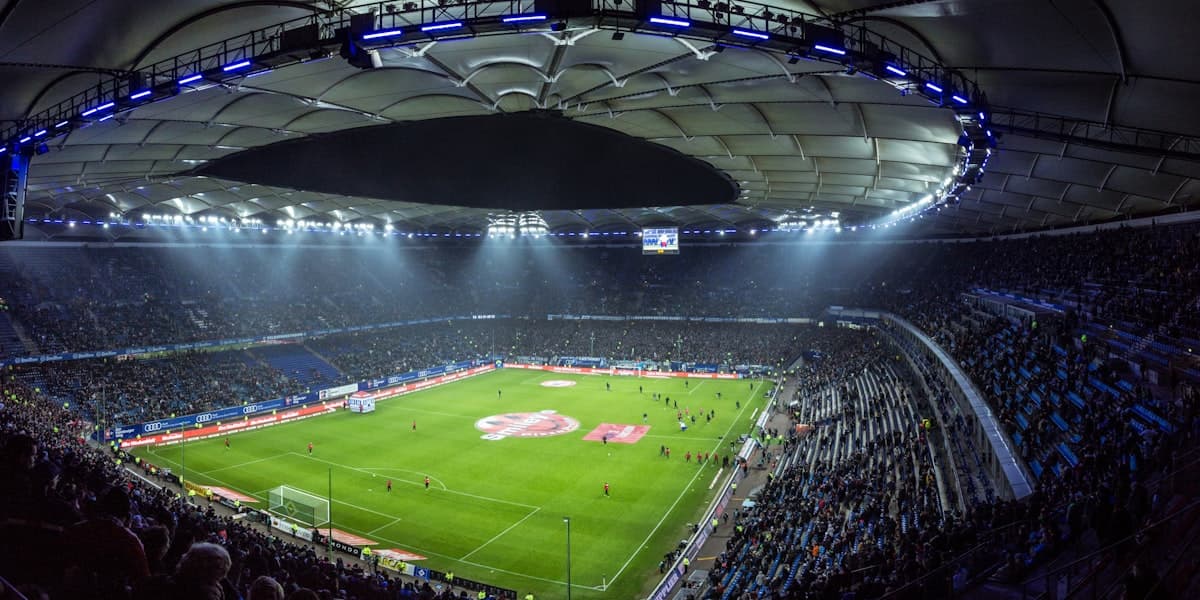
11 stadiums off the board
For six weeks, the biggest US stadium-concert rooms answer to FIFA, not promoters. Route around the window — or book the spillover just outside it.
The World Cup takes 11 US stadiums off the board: route around it, or book the spillover
June 17, 2026 · 5 min read
The verdict: for six weeks this summer, the 11 largest stadium-concert rooms in the United States answer to FIFA, not to promoters — and that hands anyone routing a summer show two moves, not one. The 2026 World Cup runs June 11 to July 19 (FIFA), and the host venues are the same rooms that stage the country’s biggest summer concerts. Read the host-city map as a competing-events calendar, because that is what it is.
This is the same competing-date math we wrote about when the market moved by geography — only this time it is one fixed-date mega-event doing the moving, not an annual ranking shuffle.
The host rooms are concert rooms, and they are out of service
The 11 US host stadiums are all NFL venues: SoFi (Inglewood), MetLife (East Rutherford), NRG (Houston), Mercedes-Benz (Atlanta), Hard Rock (Miami), Levi’s (Santa Clara), Lincoln Financial (Philadelphia), Arrowhead (Kansas City), Gillette (Foxborough), Lumen (Seattle), and AT&T (Arlington) (FIFA).
These double as the largest concert capacity in their metros, and for this window they are off the board. SoFi hosted The Weeknd for four sold-out nights in June 2025, part of his record for most sold-out shows by a male artist at SoFi — seven in all (Billboard). NRG hosted Beyoncé’s Cowboy Carter for two sold-out nights on June 28–29, 2025 — a $35.5 million Houston weekend (Billboard) on the way to the highest-grossing country tour in Billboard Boxscore history (Billboard).
Those were late-June stadium-concert weekends. In 2026, the same dates in the same rooms hold World Cup knockout matches. The biggest summer stage in each of these metros is spoken for.
The window is per-venue, not one flat six weeks
It is tempting to call this a clean six-week blackout across all 11 rooms. That is wrong, and a promoter who books on it will misjudge the calendar.
The tournament runs June 11 to July 19, but each venue’s unavailability is its own window — read the match schedule, not the outer dates. SoFi plays its first match June 12 and its last, a quarterfinal, on July 10 (NBC Sports). MetLife runs from June 13 straight through the final on July 19 — tied up the entire tournament.
A clean-stadium handover pushes each venue offline before its first match, so the concert blackout starts earlier than the schedule’s kickoff dates suggest. The point holds: a room hosting a single group-stage match frees up sooner than one hosting the final. Pull the specific venue’s window before you assume.
The industry has already named it a competing draw
This is not a hypothetical. Reporting on this summer’s softer ticket sales — the “blue dot fever” coverage — names the World Cup among the season’s competition for entertainment spend, and notes that Live Nation booked its stadium shows early, before the venues were handed to the tournament (CNBC).
The largest promoter in the business already routed around the handover — which tells you the host-city window is a real scheduling input you can underwrite months out. Be sober about the size of the effect. Live Nation’s CFO says “there is absolutely no data that supports any issues” with sales, which are up about 11% on the year (Music Business Worldwide).
The tournament is one pressure on a summer wallet that is already stretched. In a host metro, during that metro’s match window, it is a pressure you can see in advance.
Two reads: route around, or book the spillover
A promoter looking at a host city in the World Cup window has two defensible moves.
The first read is to route around it — treat the host-city window the way you would a hard Radius Clause, and keep your date clear of it. A match weekend takes a share of local press, hotel inventory, transport, and the same discretionary spend your show is chasing. If your On-Sale lands into that weekend, your first week is competing with a global event for attention. Move the date, or move it out of the metro.
The second read is to catch the spillover — aim the show at a secondary metro just outside the host city, where the displaced demand has to go. A fan priced out of, or crowded out of, the host market is still a fan. The mid-size room two hours down the road has no World Cup competing for its weekend, and the touring act rerouting away from the blacked-out stadium needs somewhere to play. That is the market hold worth chasing while the host city is occupied.
Both reads start from the same fact: the host-city window is knowable months out. Which move is right depends on your artist and your room — but doing neither, and booking the host metro blind, is the one option the calendar does not reward.
The one to check before you sign
Before you sign a summer hold in or near a host city, pull the host-city map and that venue’s specific match window. Then decide the booking on it: route the show clear of the window, or point it at a secondary metro to catch the demand the host city is pushing out. Price either read to a recent Comparable Show in the actual metro, not a national summer average. The blackout has an end date. The decision about how to use it is yours to make now.
Tools & templates
Run your first booking brief
Ask any question about an artist, market, or venue. Callboard.fm delivers a full booking brief — risk flags included — in minutes.
Start Free Trial →